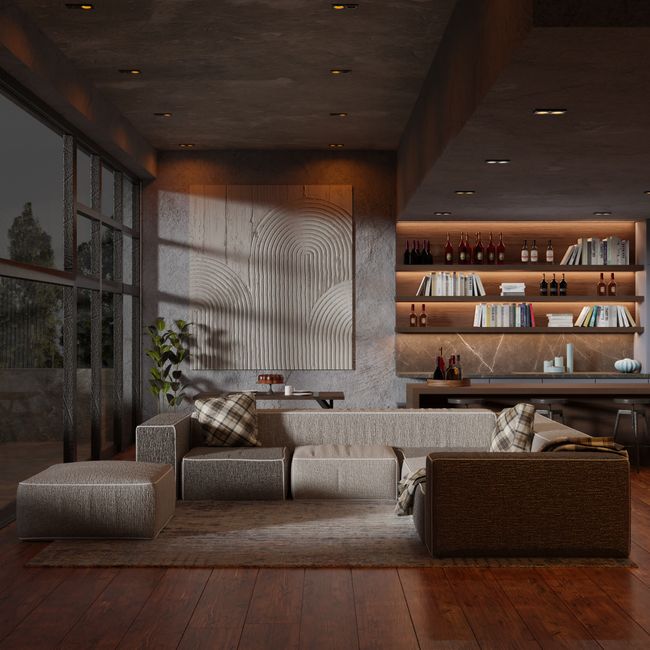
What Minimalist Living Actually Looks Like Day to Day
There’s something magical about stepping into a room that feels open and airy, where each item has a story, a purpose. I remember the first time I visited my friend Sarah’s home. It wasn’t just the lack of clutter that struck me; it was the calmness that enveloped me like a warm blanket. Every piece of furniture had been chosen thoughtfully, each artwork hung with intention. I wandered through her space, noticing how the sunlight danced on the walls, free from distractions of excess. That was my first real encounter with minimalist living, and it left a lasting impression.
Minimalist living isn’t just about decluttering; it’s a lifestyle that encourages us to reflect on what truly matters. In a world where we are often bombarded with choices and possessions, embracing minimalism can feel like a breath of fresh air. This journey is about finding clarity amid chaos, simplifying our surroundings, and ultimately, enriching our lives.
Understanding Minimalism
Many people have a narrow view of minimalism, often associating it with stark white walls and empty spaces. However, minimalism is deeply personal. Some choose a few, select items that bring them joy, while others may opt for a more austere aesthetic. What resonates with me is the idea that minimalism is about creating a space that feels like you—a reflection of your values and priorities.
Consider this: each item in your home should serve a purpose or evoke a memory. I recall going through my own belongings after that visit to Sarah’s. As I picked up a dusty trinket, I felt a connection, but it was a connection to the past, not the present. I realized that not everything needed to accompany me into my future. That process of letting go was transformative, teaching me to appreciate the beauty of simplicity.
The Benefits of Minimalist Living
- Clarity and Focus: With fewer distractions, your mind can breathe. I’ve found that my creativity flourishes in spaces that are uncluttered.
- Financial Freedom: Embracing minimalism often involves reassessing spending habits, leading to significant savings. I used to indulge in retail therapy, but now I invest in experiences rather than things.
- Environmental Impact: Consuming less means producing less waste. Minimalism aligns with a more sustainable lifestyle, something that resonates with many.
Practical Steps to Embrace Minimalism
Taking the leap into minimalist living can feel daunting. I remember staring at my overflowing closet, feeling overwhelmed and unsure of where to begin. But taking small steps made all the difference. Here are some practical tips that helped me on my journey:
1. Start with a Decluttering Challenge
One of the simplest ways to begin is to tackle one area at a time. I started with a single drawer in my kitchen. What I noticed was how much lighter I felt after removing items I hadn’t used in years. Set a timer for 15 minutes and see how much you can clear out. You’ll be amazed at how liberating it can be.
2. Adopt the One-In, One-Out Rule
This rule is straightforward: for every new item you bring into your home, let go of one. This helps maintain balance and prevents accumulation. I often apply this principle when buying clothes. Each new piece forces me to reconsider what I truly wear and need.
3. Curate Your Space
Take time to choose items that resonate with you. This is where minimalism gets personal. I’ve opted for a few cherished photographs from travels instead of a gallery wall filled with so-so prints. Each picture tells a story, igniting memories and warmth every time I walk by.
Navigating Emotions and Challenges
While the benefits of minimalism are profound, the process can also evoke unexpected emotions. Letting go of items tied to our memories can bring about feelings of loss. I struggled with this when I considered parting with my childhood books. The thought of severing ties with those pages felt heavy.
Some people argue that memories are not bound to objects, but in my experience, it’s a nuanced journey. Perhaps take a photo of the item before you let it go, preserving the memory without the physical weight. This way, you honor your past while making space for your present.
Living the Minimalist Life
Embracing minimalism is not merely about physical space; it extends to our mental and emotional landscapes. I’ve found that practicing gratitude enhances my minimalist approach. Instead of fixating on what I lack, I celebrate what I have. On tough days, I jot down three things I’m grateful for, shifting my perspective and grounding me.
Living minimally also encourages intentionality in my everyday choices, from the foods I consume to how I spend my time. I prioritize experiences over possessions, whether that’s sharing a meal with friends or exploring a new hiking trail. Each moment becomes richer when I’m not weighed down by unnecessary clutter.
A Call to Action
As you embark on your own minimalist journey, remember that it is uniquely yours. It may not happen overnight; it’s a marathon, not a sprint. Start with one drawer or one shelf, and gradually expand your efforts. The beauty of minimalist living lies in its flexibility; it can adapt to your lifestyle and preferences.
So, what will you choose to let go of today? Find that one item that no longer serves you, and release it. In doing so, you’ll discover the joy of creating space for what truly matters, and who knows? You might just find that, like me, you’ll breathe a little easier, too.
[IMAGE_PROMPT: